Blog

Photobiomodu – WHAT?

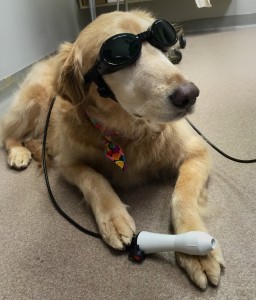
LaserPhotobiomodulation, or cold laser therapy, as it is more commonly known, works by stimulating cells to increase circulation, decrease swelling, and speed healing of damaged tissues. Laser also stimulates the release of endorphins, which cause a decrease in pain for pets and people alike.

Laser Therapy is Drug Free, Surgery Free and Pain Free relief for your pet.

With laser therapy we are able to treat pain, speed the recovery of wound healing, as well care for muscle, tendon and ligament injuries.  Laser therapy is especially useful for managing arthritis, as well as helping with post-operative recovery from orthopedic surgery such as cruciate ligament repair.

The treatments usually last between 10-30 minutes depending on the number of areas that are treated.  Ideally, 5 sessions should be performed in the first 2 weeks, then dropping down to once weekly for the next 4 sessions, with a goal of every other week to monthly maintenance sessions.

We are running a special for laser therapy sessions at Hill’s Canine Hydrotherapy.  If you sign up in the month of March, the first 5 sessions will be £100, a £150 value.  Additional sessions are £30/session.

Please note, if your dog already swims with Hill’s and you would like them to benefit from laser therapy as well, laser sessions can be done on the same day as swimming, but should be done before your dog’s swim session.


 

How Does Acupuncture Work?

I am a scientist by training and was a mechanical engineer for several years before I decided to go to vet school. Any and all modalities we use for our pets – medications, therapies, surgery, etc – should be evaluated for safety and efficacy.
This article describes the theory behind both TCVM (Traditional Chinese Veterinary Medicine) and a more scientific Western approach. Pain control and improving quality of life for your pet is my main goal. Call or email to discuss how acupuncture can help your pet!

How Does Acupuncture Work? by Matthew Gurney, RCVS & European Specialist in Veterinary Anaesthesia & Analgesia

photography of three dogs looking up
Photo by Nancy Nobody on Pexels.com

What element is your pet?

five-elements-diagram

The Five-Element Theory is one of the two fundamental theories of Traditional Chinese Veterinary Medicine (TCVM). The other is Yin/Yang theory, which we will certainly talk about later!  The Five Element Theory explains the relationships between elements in the environment.

There are 5 Chinese elements – Fire, Earth, Metal, Water and Wood.  Each element is associated with certain emotions, personality traits and characteristics that are readily identifiable in each and every pet, or for that matter, person.

Each element is also associated with organs of the body.

  • Fire – heart
  • Earth – spleen/stomach
  • Metal – lung
  • Water – kidney
  • Wood – liver

Fire

  • Fire type animals are usually animals that are happy all the time. They are playful, they want and seek attention, and they seem to be somewhat hyper. They are just happy-go-lucky.
  • Fire-type pets usually deal with diseases of cardiovascular origin. They seem to get restless easy, they may deal with separation anxiety, or any diseases really related to the heart.
  • Key phrase – “It’s all about me!!!”

Earth

  • An earth pet is a pet that’s easy going and it’s an easy keeper. They tend to be sociable and are very food oriented. They are easy  to train with food.
  • They are loyal friends, they’re easy going, they’re quiet, and they’re supportive. They are just good pets.
  • Earth pets tend to suffer from gastrointestinal problems and obesity.
  • Key phrase – “Let’s all get along…”

Metal

  • Metal animals are confident,  they tend to obey. They seem very structured and disciplined in what they do. They’re independent, they follow the rules, typically they’re very well manicured and maintained. They have good vision and are smart.
  • Metal pets tend to suffer from are typically diseases related to the lung – diseases such as asthma, sinus problems, maybe nasal congestion, cough, frequent colds.
  • Key phrase – “We have to follow the rules.”

Water

  • Water animals are timid or fearful. They are cautious and quiet. They are the kind of pets that will hide under the chair or the exam table in the veterinarian’s office. They just seem a little bit scared all the time.
  • Water pets may have kidney issues, chronic urinary tract infections.  They also frequently suffer with deafness and arthritis as they age (the water element is also associated with both hearing and bones).
  • Key phrase – “I’m scared!”

Wood

  • Wood animals are very confident, they are very assertive, decisive, strong.  The can be very impatient.  They are also very athletic. They tend to have big eyes and a thin, strong wiry frame.
  • Wood pets can have liver problems and also suffer with ear and allergy issues.
  • Key phrase – “I’m in charge!”


Here is a fun online quiz to help you figure out what element best describes your pet:


Acupuncture Points

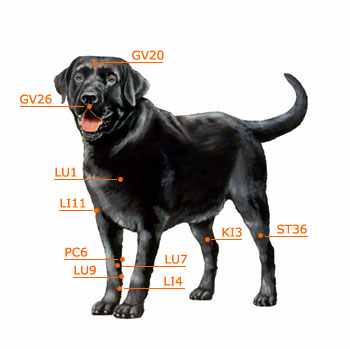
There are over 300 distinct acupuncture points located on meridians throughout the body.  Today, we are going to talk about one of my favorites, ST 36.

Stomach 36 (ST 36) is the 36th point on the stomach meridian, which runs from right below the eye all the way to the second toe on the back foot. Zu San Li is ST 36’s Chinese name, which roughly translates into English as “Leg Three Li” and derives its name from the legend according to which a weary traveler (during the time when travel was predominantly on foot) who stimulated Zu San Li would then be energized enough to be able easily to journey an additional three li: the equivalent of about a mile.

ST 36 is located on the outside of the back leg, below the knee and behind the tibial crest, in the middle of the tibialis cranialis muscle.

st36

ST 36 is a very useful acupuncture point and I use it in most treatment plans.  It has general analgesic effects, providing good pain control and helps alleviate exhaustion, improves energy levels and supports the immune system. It is also the master point for abdomen and GI tract, and is used when nausea, diarrhea, constipation and vomiting are present. It can also help improve appetite, which is very helpful with senior pets who have poor appetites.

Why try acupuncture?

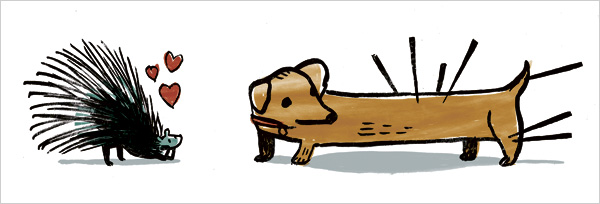
acupine

Acupuncture is a great complimentary therapy to add to any on-going treatment plan.  It does not interact with commonly prescribed treatment protocols or medications and can be readily added to help manage chronic pain, chronic inflammation, neurologic conditions, and even metabolic disorders including kidney and liver disease.

Acupuncture

  • alleviates pain
  • boosts the immune system
  • helps reduce inflammation
  • promotes muscle relaxation
  • improves tissue oxygenation

​Acupuncture should be considered as an addition to any treatment protocol, but is commonly over-looked until traditional medical approaches are not adequately addressing a pet’s pain or medical condition.  Use of acupuncture early in the course of a disease can help improve quality of life and promote optimal health and overall wellbeing.

Acupuncture itself is extremely safe, is well tolerated and can reduce the need for medications. What have you got to lose?!